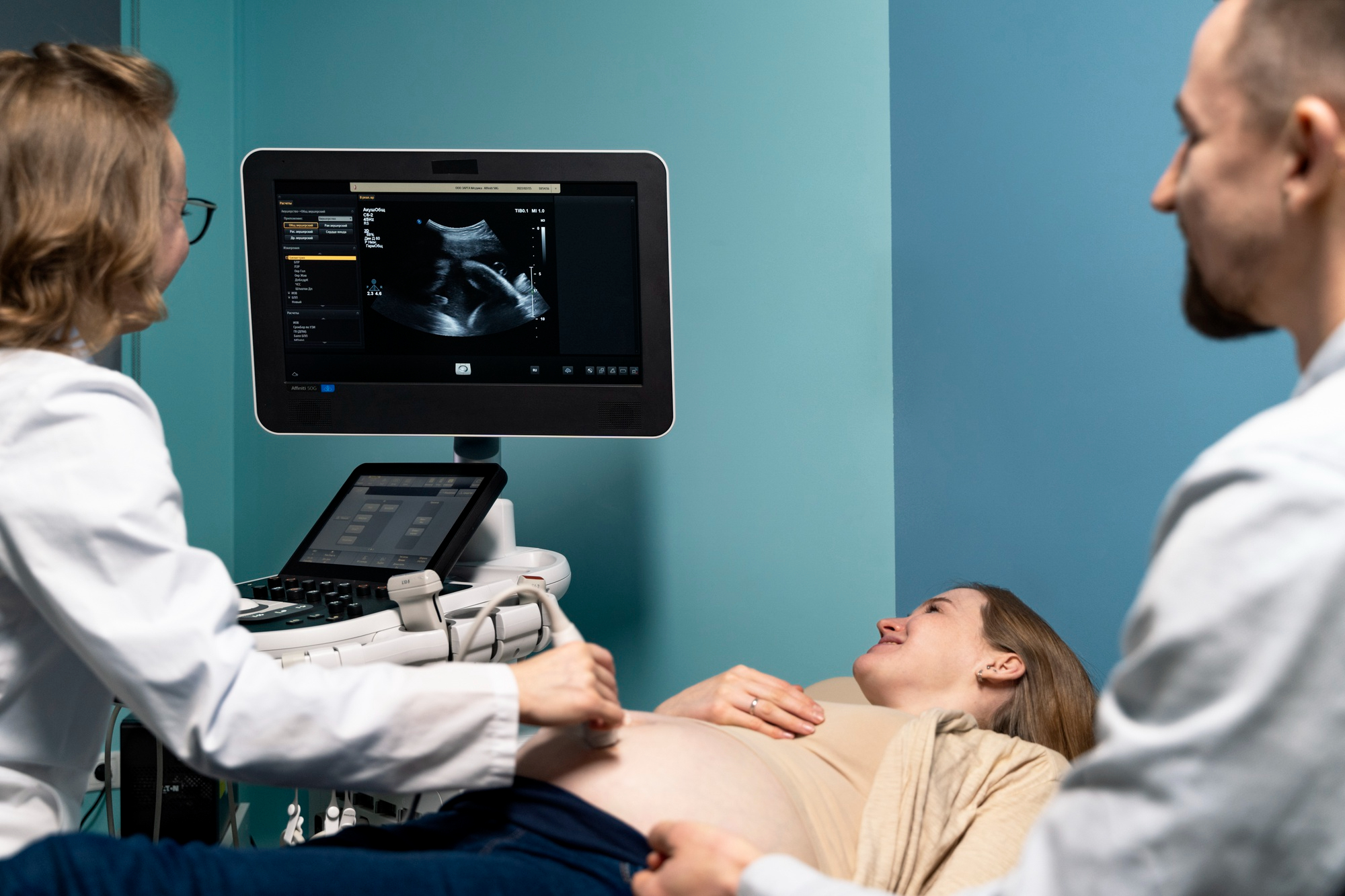
Ultrasound imaging is a safe and effective tool for evaluating your gynecologic health when you have issues like fibroids, and it’s also important to check on your baby’s growth when you’re pregnant. At New England Women’s Healthcare in Woburn, Wakefield, and Wilmington, Massachusetts, your skilled OB/GYN care providers give you the compassionate care you need at every point of your life. Book your appointment online or by phone today.
What is an ultrasound?
Ultrasounds use sound waves to generate images of your inner body. Through ultrasounds, your New England Women’s Healthcare providers can view your uterus and other reproductive organs in great detail. Ultrasounds are often part of pregnancy care, and they’re also important for the diagnosis of problems like fibroids.
When will I have ultrasounds during pregnancy?
At New England Women’s Healthcare, you’ll have ultrasounds at a few key points in your pregnancy. The exact schedule for your ultrasounds depends on your health, whether your pregnancy is high-risk, and whether you have any complications.
Many women have an ultrasound early in pregnancy, sometime during the first trimester, to confirm pregnancy, check for some types of birth defects, and establish a due date. Later, usually in your second trimester, you may have another ultrasound to check on your baby’s development. In the second trimester ultrasound, you can often find out the baby’s sex if you’d like to.
If you have complications like bleeding, you may have additional ultrasounds in your second or third trimester, depending on your needs.
When do I need a pelvic (non-pregnancy) ultrasound?
If your New England Women’s Healthcare doctor detects fibroids or other masses during a pelvic exam, they may recommend an ultrasound to examine it in more detail. Another possible reason for a pelvic ultrasound is diagnosing the reason for unusual pelvic pain, abnormally heavy bleeding, or prolonged periods.
If you’re struggling to conceive a baby, and it’s been a full year since you started trying, your OB/GYN may use an ultrasound to check for possible infertility causes.
How do I get ready for an ultrasound?
If the ultrasound is during your first trimester, or you’re having a pelvic ultrasound, you typically need to drink 2-3 full glasses of water just ahead of the appointment. This makes it much easier to get good images during the ultrasound.
You may not need to drink extra water before an ultrasound later in pregnancy, thanks to the amniotic fluid and your baby’s larger size. Your New England Women’s Healthcare provider will tell you exactly how to prepare.
Use the online scheduler or call New England Women’s Healthcare to book your appointment today.